
One of the most common questions global brands ask before entering South Korea is: How much will it cost?
There is no single number that applies to every brand. A beauty product, wellness brand, fashion label and equipment company can face completely different regulatory, logistics, channel and marketing requirements.
What matters is building the budget around the commercial system required to operate in Korea — not simply adding a launch advertising budget to the home-market plan.
Korea Market Entry Cost Is a System, Not One Line Item
A realistic budget normally includes several layers that affect one another. Pricing influences channel choice. Channel choice influences logistics. Logistics affects margin. Localization affects conversion. Marketing spend is wasted if the product page, customer service or inventory structure is not ready.
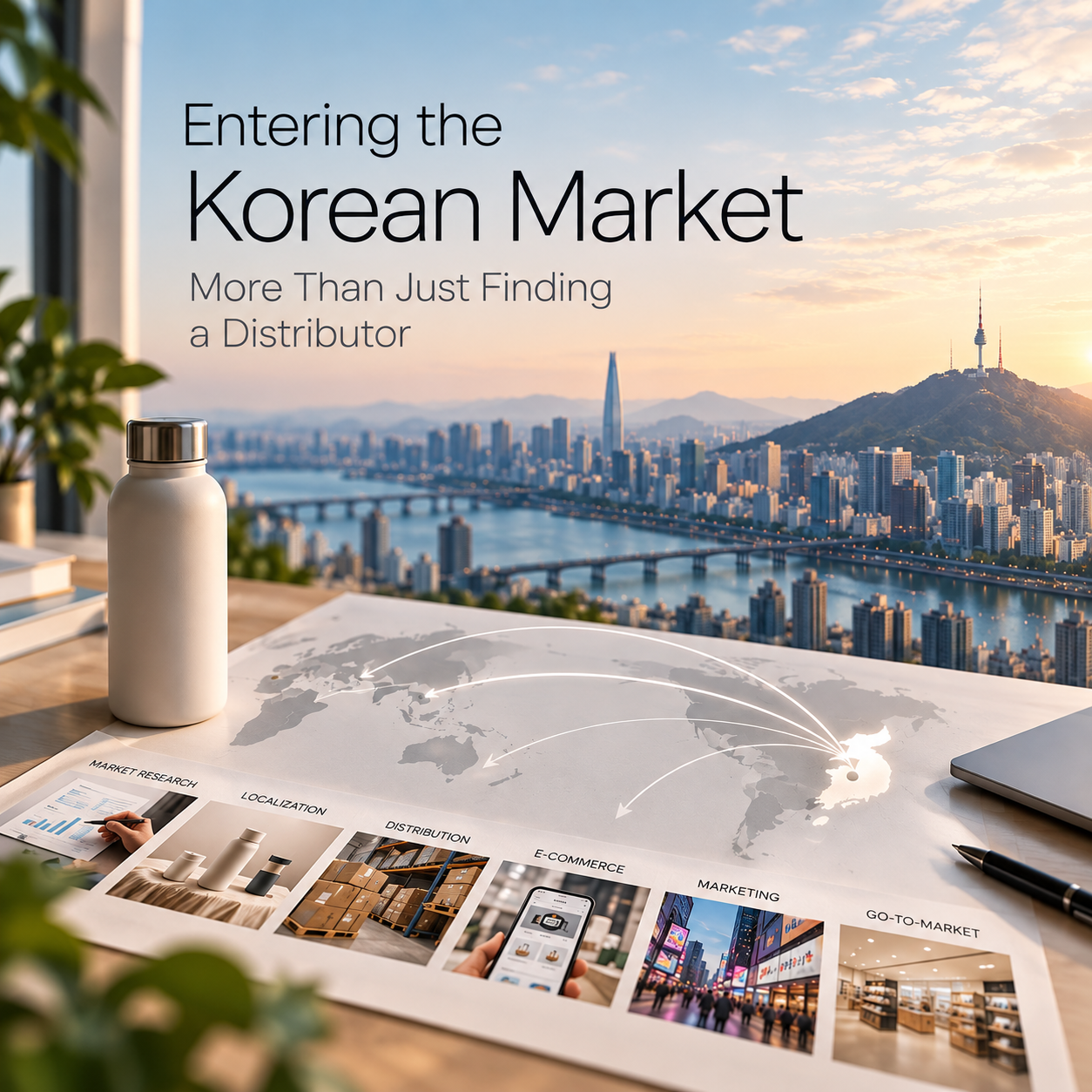
For most global consumer brands, the major cost categories can be grouped into seven areas.
1. Market Validation and Strategy
Before committing to a full launch, the brand needs to understand whether the opportunity is commercially realistic.
This stage may include competitor mapping, category research, price benchmarking, consumer analysis, channel assessment and product prioritization.
Skipping this work can make the launch look cheaper at first, but it increases the risk of making expensive decisions later — such as importing the wrong SKU mix, choosing an unsustainable retail price or signing with the wrong channel partner.
2. Regulatory, Import and Product Readiness
Some categories require significantly more preparation than others.
The budget may need to account for product documentation, labeling, certification, testing, import coordination and local compliance work. The exact process depends on the product category, so this area should be confirmed before the commercial launch timeline is finalized.
This is also where global brands often discover that the original packaging or product information needs to be adapted for Korea.
3. Localization and Launch Assets
Localization is more than translating a product description.
A Korea launch may require local product pages, marketplace assets, brand messaging, FAQs, customer-service scripts, campaign creatives, search-oriented copy and channel-specific content.
The cost depends on how much existing global content can be reused and how much needs to be rebuilt for the Korean buying journey.
Brands should protect the global identity while adapting the information customers need to understand, trust and purchase the product.
4. E-commerce and Channel Setup
Different channels create different setup and operating costs.
An official D2C store gives the brand more control over presentation and customer data, but it requires commerce infrastructure, payment, fulfillment, customer service and ongoing store management.
Marketplaces can provide existing traffic and conversion infrastructure, but they introduce platform fees, promotional pressure, review management and price-comparison dynamics.
Offline or wholesale expansion creates another layer of margin and account management.
The important point is that a channel is not free simply because opening the account is inexpensive. The full operating cost should be included in the model.
5. Inventory, Fulfillment and Working Capital
Inventory is one of the easiest costs to underestimate.
The brand needs enough stock to support the launch without tying up unnecessary capital. It also needs a plan for inbound shipping, storage, order fulfillment, returns and damaged products.
A large first order may reduce unit logistics costs but increase inventory risk. A smaller pilot may cost more per unit while giving the brand valuable market evidence before scaling.
The right choice depends on shelf life, lead time, minimum order quantities, demand uncertainty and the speed at which the brand can replenish stock.
6. Marketing and Demand Generation
Marketing should not be treated as a single launch campaign.
The budget may include search, paid social, creator collaboration, sampling, marketplace advertising, CRM, content production and promotional activity.
More importantly, the brand needs enough budget to learn. A first campaign does not always reveal the final acquisition model. Different messages, audiences, products and channels often need to be tested before the brand can scale efficiently.
That is why a market-entry budget should separate validation spend from scaling spend.
7. Local Operations
Once the product is live, someone needs to run the business.
Typical responsibilities include order issues, customer inquiries, marketplace management, promotions, inventory coordination, partner communication, reporting and campaign execution.
This operational layer is easy to overlook because it does not always appear in a launch deck. But weak day-to-day execution can quickly damage conversion, reviews and customer trust.
Pilot Launch vs Full Market Entry
A global brand does not always need to build the final Korea operation on day one.
A pilot launch can be designed to answer a limited number of questions:
- Does the positioning resonate?
- Which products attract demand?
- What price points convert?
- Which acquisition channels generate qualified traffic?
- What questions or objections do customers have?
- What operational issues appear after real orders begin?
Once those answers become clearer, the brand can make larger investments with better information.
This is often more efficient than committing immediately to a broad retail footprint, large inventory position and high marketing budget based only on assumptions.
Build the Budget Backward From the Business Model
Instead of asking, “How much should we spend to launch in Korea?”, start with the commercial model.
Define the target retail price, expected channel structure, margin requirements, operating model and customer acquisition plan. Then calculate what level of investment the model can support.
Our Korea market entry checklist covers the decisions that should be made before launch, while our market entry services connect those decisions to local execution.
Planning a Korea Market Entry Budget?
BRAUM PARTNERS helps global brands structure Korea launches around realistic commercial assumptions — from positioning and channel strategy to e-commerce, marketing and operations. Contact us if you are building a Korea market-entry plan and need to understand what should be funded first.