
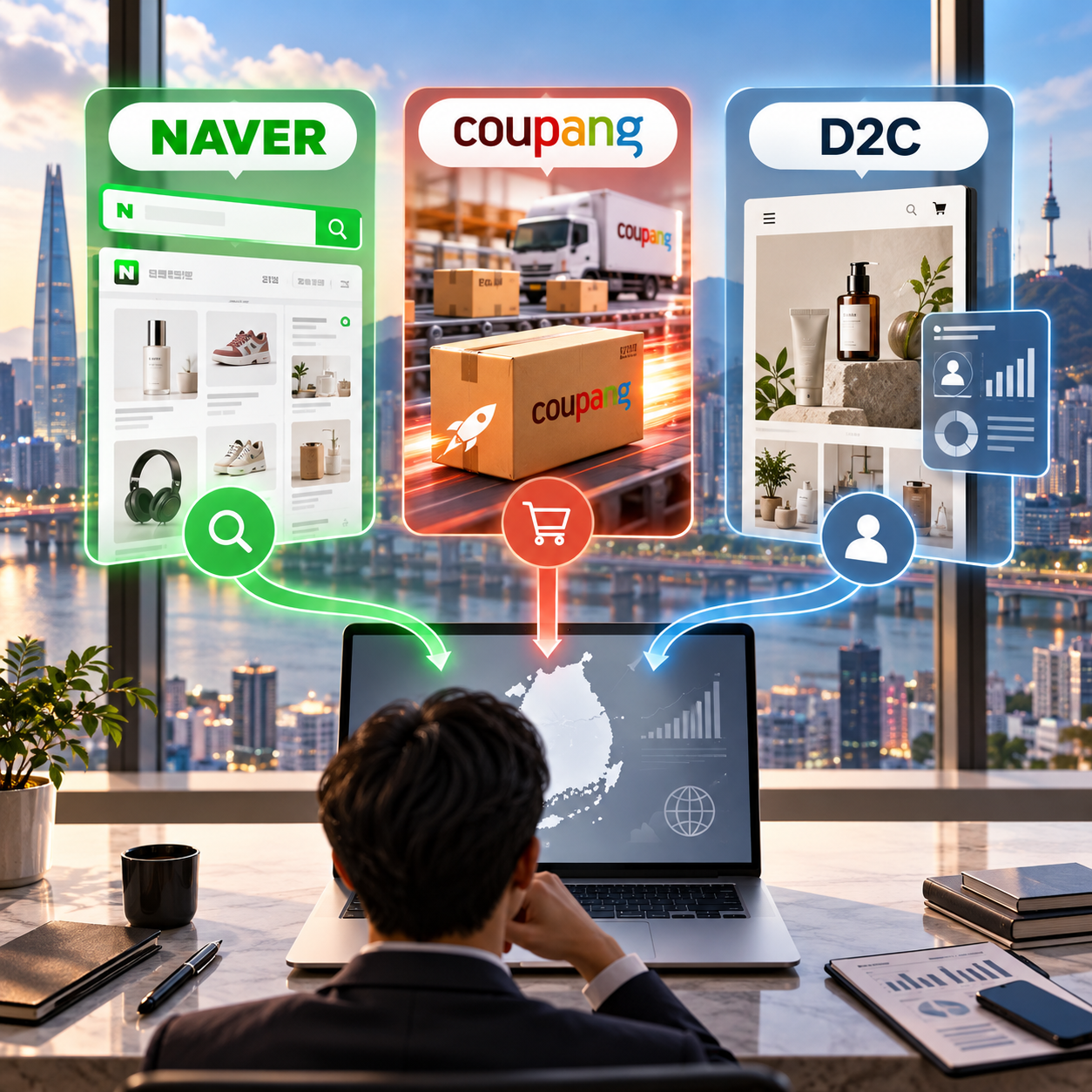
Global brands entering South Korea often ask which e-commerce channel should come first: Naver, Coupang or an official D2C store?
The answer is rarely one platform.
Korean customers may discover a product through content, search for the brand, compare prices on marketplaces, read reviews, visit the official website and eventually purchase through whichever channel feels most convenient.
That means channel strategy is not only about where the transaction happens. It is about how the channels work together across discovery, trust, conversion and retention.
Naver: Search, Discovery and Brand Validation
Naver plays an important role in the Korean digital journey because customers often use search to validate unfamiliar products and brands.
For a global brand, visibility around branded and category-related searches can influence trust before the customer ever reaches a product page.
Naver commerce can also connect search intent with shopping results, reviews and promotional activity.
The strategic value is therefore broader than simply opening another sales account. Brands should think about how product information, search visibility, content and commerce support one another.
Coupang: Convenience and Conversion
Coupang is strongly associated with convenience, fast purchase decisions and a mature marketplace experience.
For brands, that can create access to customers who are already comfortable buying through the platform.
But marketplace convenience also creates pressure. Products can be compared quickly, price differences become highly visible, reviews matter and promotional decisions can affect how the brand is perceived across other channels.
A brand should enter Coupang with a clear view of pricing, inventory, fulfillment and promotional rules — not simply because the platform has a large customer base.
D2C: Control, Brand Experience and Customer Data
An official direct-to-consumer store gives the brand something marketplaces cannot fully provide: control.
The brand controls the product story, merchandising, bundles, CRM, first-party customer relationships, content hierarchy and post-purchase experience.
D2C is also useful when the brand needs to explain a product in more depth than a marketplace listing allows.
The trade-off is that the brand must generate its own qualified traffic and operate the store properly. A beautiful website without acquisition, fulfillment and customer service is not a channel strategy.
The Channels Should Have Different Jobs
Trying to make every channel perform the same role often creates unnecessary conflict.
A better model is to define a clear purpose for each channel.
- Official D2C: brand experience, education, bundles, CRM and customer data.
- Naver: search visibility, product discovery, comparison and local credibility.
- Coupang: convenience, fast conversion and access to marketplace-oriented customers.
- Offline retail: physical trial, visibility and credibility where the category benefits from it.
The exact mix depends on the category, but assigning a role to each channel makes pricing and promotion decisions easier.
Price Consistency Matters
One of the biggest risks in a multi-channel structure is price conflict.
If one marketplace repeatedly undercuts the official store, customers quickly learn that the brand’s own channel is not the best place to buy. That weakens D2C conversion and can make future retail partnerships more difficult.
This does not mean every promotion must be identical. Different channels can use bundles, gifts, loyalty benefits or event-specific offers. But the overall price architecture should remain understandable and defensible.
Reviews Are Part of the Channel Strategy
Reviews do more than improve conversion on one product page. They become part of the information customers use while comparing the brand across the market.
For a new global brand, early customer feedback can also reveal localization issues, product questions, delivery expectations and points of confusion that were not obvious before launch.
That information should flow back into product pages, FAQs, advertising and customer-service scripts.
Which Channel Should Come First?
The answer depends on what the brand needs to learn.
If the product requires education and the brand wants direct customer data, a D2C-led pilot may be useful.
If category search behavior and local comparison are critical, Naver should be planned early.
If convenience and marketplace conversion are especially important, Coupang may need to be part of the launch structure from the beginning.
Many brands will ultimately use a combination, but the sequence should be intentional.
A Practical Launch Sequence
For a new market entrant, one possible approach is:
- Define the target customer, positioning and price architecture.
- Build the Korean product story and core localized assets.
- Launch a controlled set of channels rather than opening everything at once.
- Measure traffic, conversion, search behavior, reviews and customer questions.
- Expand the channel mix once the economics and operational model are clearer.
This approach reduces complexity while still creating enough market evidence to make better decisions.
Channel Strategy Is Part of Market Entry Strategy
Naver, Coupang and D2C should not be treated as isolated storefront decisions. They affect brand perception, pricing, customer data, promotional flexibility, logistics and acquisition economics.
That is why commerce planning should happen before launch rather than after the product arrives.
For a broader view, read our Korea market entry checklist and our guide to common Korea market entry mistakes.
Building a Korea E-commerce Strategy?
BRAUM PARTNERS helps global brands connect market entry strategy with e-commerce, localization, marketing and local operations. If you are deciding how to structure Naver, Coupang and D2C for Korea, talk with us about your launch.