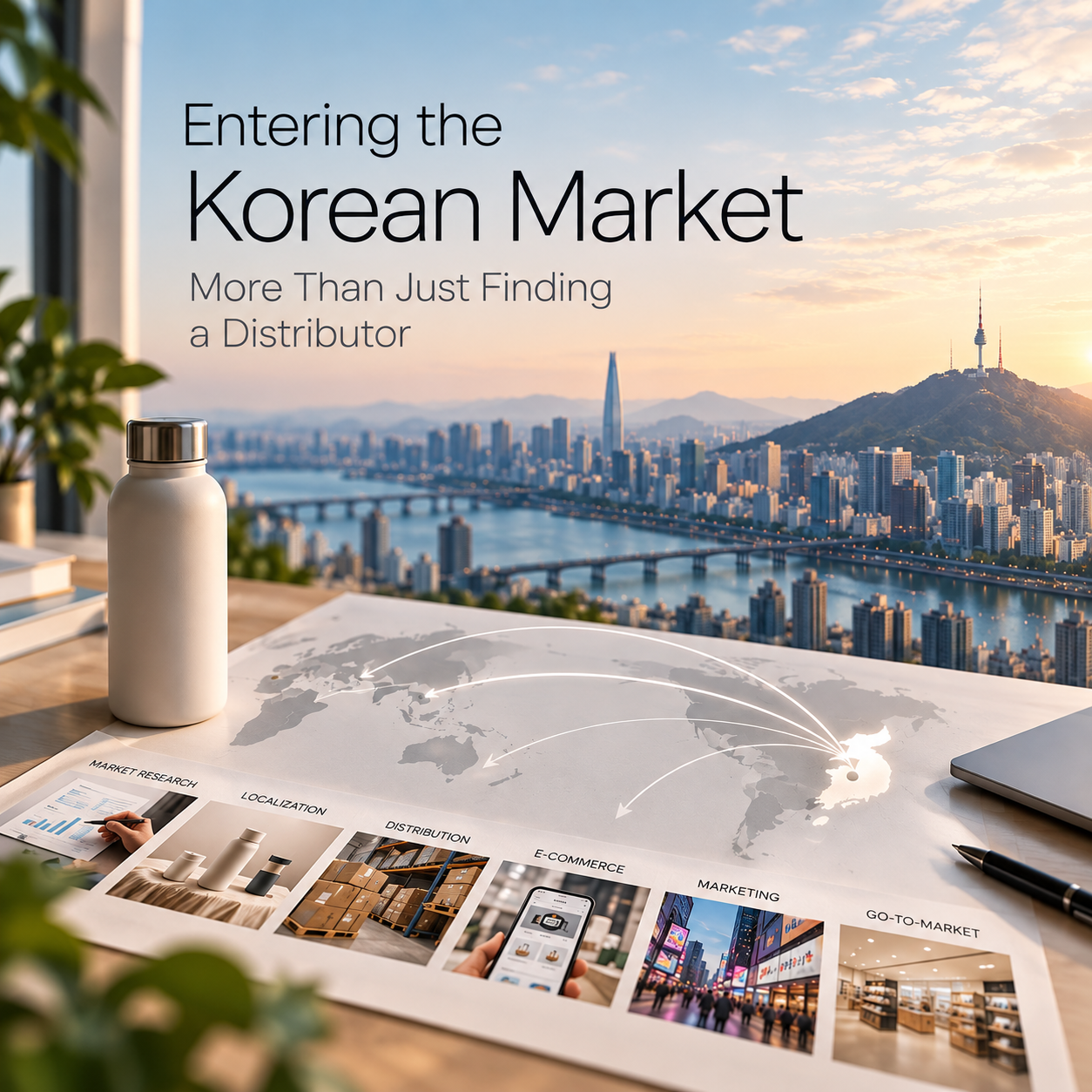

For many global brands, the first Korea market entry question is simple: Do we need a distributor?
Sometimes the answer is yes. A strong distributor can accelerate import, sales, retailer access and local execution. But choosing a distributor too early can also lock a brand into a structure that limits pricing control, customer data, channel strategy and long-term flexibility.
The better question is not whether distributors are good or bad. It is which operating model fits the brand, the category and the stage of market entry.
What a Distributor Can Solve
A capable distributor can remove a large amount of operational friction. Depending on the category and agreement, a local distributor may handle import coordination, inventory, wholesale sales, retailer relationships, marketplace operations, customer service, local promotions and commercial reporting.
For brands that want a relatively light local footprint, this can be attractive. Instead of building every function internally, the brand works through one local commercial partner.
But convenience has a trade-off: the distributor becomes an important layer between the brand and the Korean market.
What a Distributor Does Not Automatically Solve
Distribution is not the same as market strategy.
A distributor may know how to move products, but that does not automatically mean the brand has the right positioning, price architecture, channel mix, product story or customer experience for Korea.
Before appointing a distributor, global brands should still answer several questions:
- Who is the real target customer in Korea?
- Which local and international brands will customers compare us with?
- What retail price can the market realistically support?
- Which products should launch first?
- Where will customers discover the brand?
- Which channels should build awareness, and which should drive conversion?
- How much control does the brand need over promotions, content and customer data?
If these decisions are left entirely to the distributor, the market strategy can end up being shaped by the distributor’s existing sales model rather than the brand’s long-term goals.
When a Distributor Makes Sense
A distributor is often a strong option when the category depends heavily on wholesale relationships, offline retail access or established local sales networks.
It can also make sense when the brand wants to enter Korea without building a local operating team and is comfortable giving a partner meaningful control over commercial execution.
The model is especially useful when the economics support enough margin for every layer of the channel while keeping the final consumer price competitive.
In those cases, the priority is not simply finding a company willing to distribute the product. It is finding a partner whose incentives, channel strengths and operating capabilities match the brand’s strategy.
When a Distributor Can Become a Constraint
The distributor model becomes more difficult when the brand wants direct control over pricing, e-commerce, performance marketing, customer data or brand experience.
Problems can also appear when the distributor earns primarily through sell-in while the brand is focused on long-term consumer demand. The two sides may then optimize for different outcomes.
Other common tensions include discounting, marketplace pricing, marketing investment, inventory levels, channel exclusivity and ownership of local customer relationships.
None of these issues means the distributor model is wrong. They simply need to be designed into the agreement and operating structure from the beginning.
Alternative Korea Market Entry Models
Global brands increasingly have more than one way to build a presence in Korea.
1. Distributor-led model
The local distributor purchases or manages inventory and leads commercial execution. This is operationally simple for the brand but generally provides less direct control.
2. Local operating partner model
The brand retains more strategic and commercial ownership while a local partner coordinates e-commerce, marketing, operations and market execution. This can provide more control without requiring a full Korean team from day one.
3. Agency + specialist partners
The brand works with separate partners for marketing, commerce, logistics, import or customer service. This can be flexible, but someone still needs to own the full operating model and coordinate the pieces.
4. D2C-first market test
For suitable categories, a controlled direct-to-consumer launch can be used to validate positioning, pricing and demand before a broader distribution agreement is signed.
The right structure depends on the product, regulatory requirements, margin profile, internal resources and the amount of control the brand wants to retain.
A Better Decision Framework
Before signing with a distributor, ask six practical questions:
- What do we need the partner to own? Import, inventory, sales, marketing, e-commerce, customer service or all of them?
- What do we want to control ourselves? Brand strategy, retail price, content, advertising, customer data or channel decisions?
- Where will most sales realistically happen? Wholesale, marketplaces, D2C or a combination?
- Does the margin structure still work? Every additional commercial layer affects the final retail price.
- How will performance be measured? Sell-in alone may not reflect consumer demand or brand health.
- Can the structure evolve? A market test and a mature national distribution model do not need to look the same.
Start With the Market Model, Then Choose the Partner
The distributor decision should come after the market-entry strategy, not before it.
A global brand first needs to understand how it will compete, how customers will discover it, which channels matter, how the economics work and what local capabilities are required. Once that is clear, it becomes much easier to decide whether a distributor, operating partner or hybrid structure is the right fit.
If you are still defining the broader plan, our Korea market entry services connect strategy, localization, e-commerce, marketing and local operations. You can also review our guide to entering the Korean market beyond finding a distributor.
Planning Your Korea Market Entry?
BRAUM PARTNERS helps global brands design practical Korea market entry structures and connect strategy with execution. If you are evaluating distribution, D2C or a hybrid model, start a conversation with us.