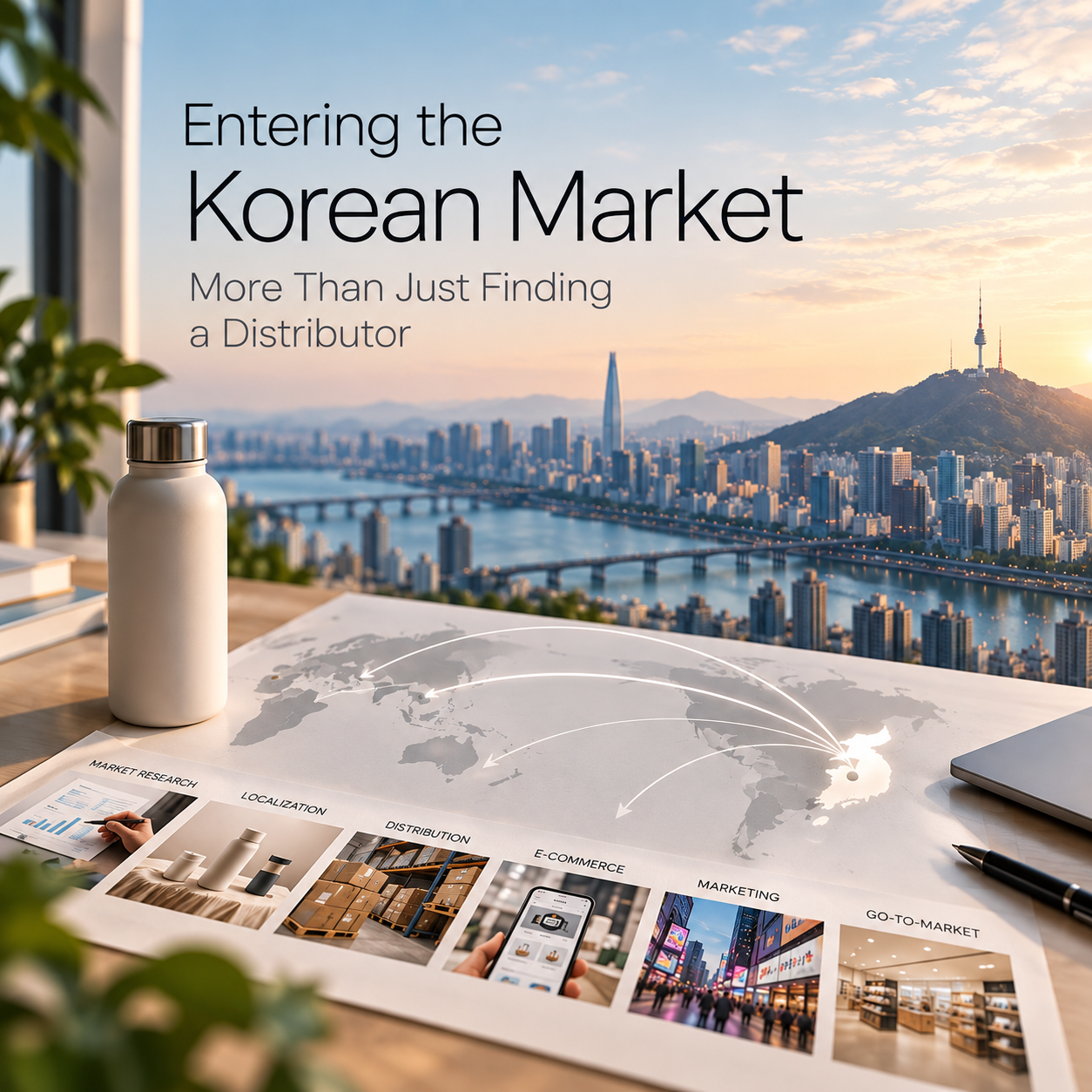

The Korea Market Entry Checklist Nobody Gives You
Most brands don’t fail in Korea because of their product.
They fail because they underestimate the market.
South Korea is one of the most digitally connected countries in the world, but entering Korea is not simply a matter of translation, advertising, or finding a distributor.
Consumer behavior, purchasing decisions, digital ecosystems, and expectations around customer experience are fundamentally different from Western markets.
The brands that succeed understand one thing:
Korea is not a smaller version of another market. It is a market of its own.
Before You Launch
Before entering the Korean market, ask yourself the following questions:
- Have you validated your product in the Korean market?
- Is your pricing aligned with local competitors?
- Do you have Korean-language assets and brand materials?
- Have you identified your target customer?
- Do you understand where Korean consumers search?
- Is your customer support ready?
- Have you planned your logistics and fulfillment strategy?
Getting these fundamentals right can save months of unnecessary delays and expensive mistakes.
What Most Brands Forget
Many international brands focus on marketing first.
In reality, the biggest challenges are often:
- Localization
- Distribution
- Customer support
- Regulatory requirements
- Building trust with Korean consumers
Marketing can accelerate growth, but it cannot fix an unprepared market entry strategy.
The brands that perform best in Korea are usually the ones that invest time in preparation before spending money on acquisition.
Understanding Korea’s Digital Ecosystem
Google matters.
But Korea operates differently.
Consumers and buyers spend their time across multiple platforms:
- Naver
- Kakao
- YouTube
- Coupang
Understanding where your customers discover, evaluate, and purchase products is often more important than increasing your advertising budget.
Localization is not simply translating a website—it is understanding how Korean consumers make decisions.
Why Timing Matters
Many companies expect to launch in Korea within a few weeks.
In practice, successful market entry often takes several months.
You may need to consider:
- Market research
- Localization
- Regulatory reviews
- Distribution partnerships
- D2C infrastructure
- Marketing preparation
- Customer support operations
Launching too early is often more expensive than launching slightly later with the right foundation.
One More Thing
Launching in Korea is rarely a three-month project.
The brands that succeed are the ones that remain patient, move strategically, and execute consistently.
At Braum Partners, we believe successful market entry is not about moving faster.
It is about moving in the right direction.
Planning to Launch Your Brand in Korea?
Whether you’re building a consumer brand, preparing a D2C launch, or exploring the Korean market for the first time, we’re happy to start the conversation.
Braum Partners
Building Brands. Launching in Korea.